From a French Basement to Your Backyard: Septic Tank History
September 1, 2026
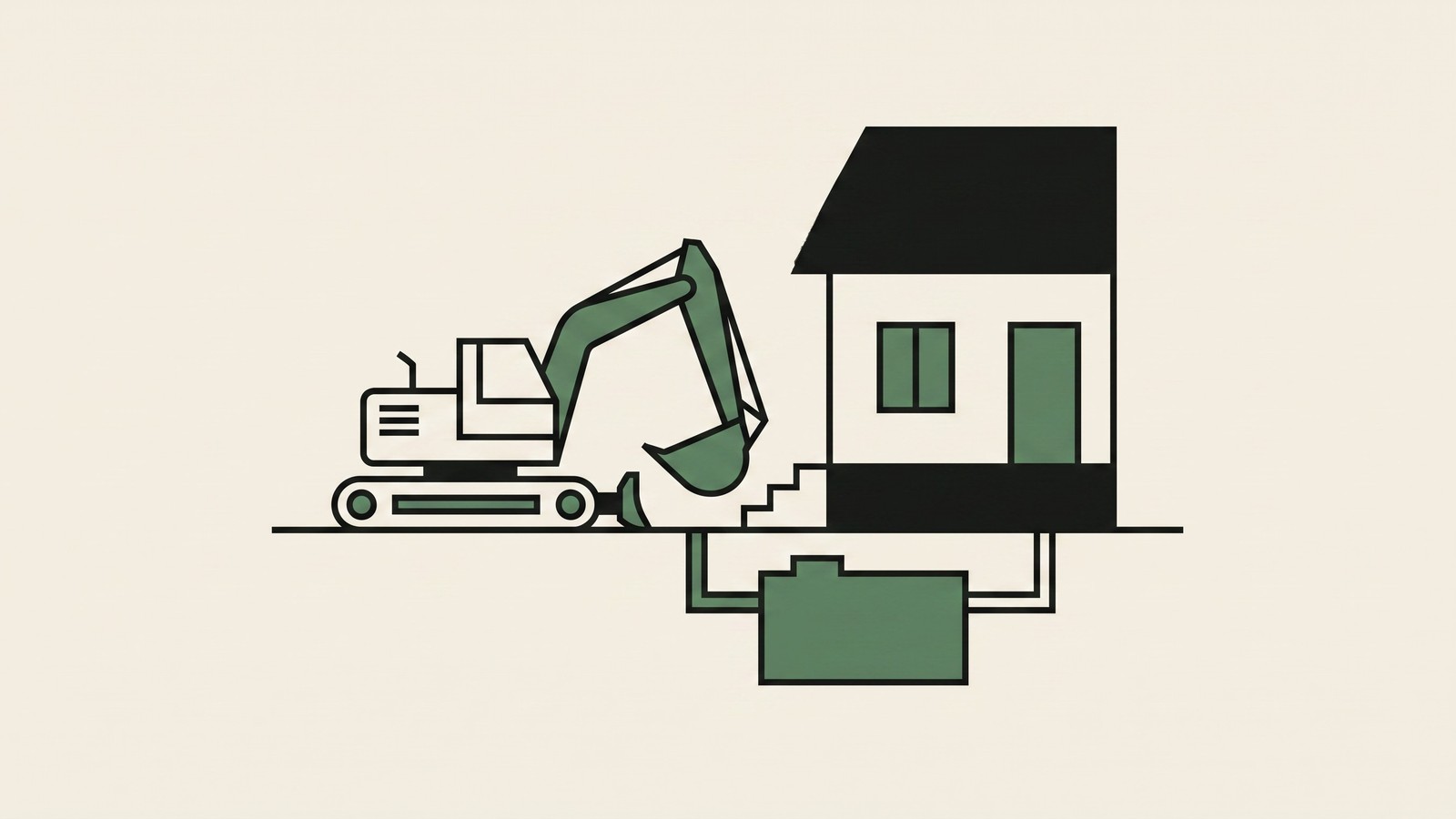
Most homeowners in Fort Mill or Waxhaw never think about where the idea for their septic system came from. Fair enough. Nobody thinks about the history of their water heater either. But this one's a genuinely good story, and understanding where the technology came from actually helps explain why modern systems need the kind of maintenance they do.
A Frenchman, a Concrete Box, and an Accident
The concept of the septic tank originated in France during the 1860s, when Jean-Louis Mouras, a French inventor, developed the first known septic system. He constructed a concrete tank connected to his home's toilet via clay pipes. Wastewater flowed in, and Mouras figured he'd have to deal with the mess eventually.
He didn't check on it for ten years. After a decade of use, Mouras dismantled his system to evaluate its effectiveness, and found that the tank had effectively processed the waste, leaving only minimal solids. That was the moment the septic tank stopped being a guess and became a real technology. Mouras's system relied on natural anaerobic bacteria to break down organic matter, a principle still used in modern septic tanks.
He didn't rush the patent either. This success led to the widespread adoption of the septic tank concept, and Mouras patented his design in 1881. The design crossed the Atlantic fast by the standards of the time. This septic tank made its way to the United States in 1883.
How the Design Spread and Changed
Early American builders copied Mouras's approach almost exactly. Early American septic systems adhered closely to Mouras' design and were made of concrete or steel. For decades, that was basically it: a buried tank, some pipes, gravity doing the work.
Things picked up speed after World War II, when suburbs started spreading across places that had no city sewer lines nearby, which is exactly the situation across a lot of Mecklenburg County and York County today. By the 1940s, septic systems were common from coast to coast, and by the 1960s, when these systems began failing, significant improvements to the overall design were developed. Those older tanks had real problems. The World War II-era systems were prone to cracking and corrosion. Rusty pipes would erode and tanks would crack, leading to plumbing disasters and environmental hazards all over.
That failure wave forced the industry to fix materials, not just design. Today's systems are made of durable fiberglass, precast concrete, PVC and other plastics that are designed to last for decades without fail.
What's Actually Different in a Modern Tank
If you dropped Jean-Louis Mouras into a backyard in Steele Creek or Indian Trail today, he'd recognize the basic idea but not the details.
Materials. Concrete is still common, but it's precast and reinforced now instead of poured on-site by guesswork. Fiberglass and heavy plastic tanks are everywhere too, especially where soil is corrosive or a home is being retrofitted.
Internal structure. Old tanks were single chambers. Most modern residential tanks are split into two compartments, so solids settle out before liquid ever reaches the drainfield. That single change cuts down on drainfield clogging dramatically.
Effluent filters. These didn't exist in the 1800s. A filter at the outlet baffle catches smaller solids before they can travel downstream and damage the drainfield. It's a cheap part that saves homeowners thousands in field repair.
Distribution. Old drainfields relied purely on gravity and hope. Modern systems, especially in tighter lots around Rock Hill or Matthews, often use distribution boxes or pump systems to spread effluent evenly across the whole field instead of overloading one end.
Site engineering. This is the biggest shift. Nobody does a percolation test or soil evaluation for a septic system anymore without real data. Piedmont clay soil, which covers a lot of Charlotte, Gastonia, and the surrounding counties, drains slowly compared to sandy soil. Engineers size tanks and drainfields around that reality now instead of guessing.
How Often Should a Septic Tank Be Pumped in Charlotte NC?
Most homes on a standard system need a pump-out every 3 to 5 years. A few things push that number around:
- Household size. A family of five fills a tank faster than a retired couple.
- Garbage disposal use. It adds solid volume to the tank every time it runs.
- Soil type. Clay-heavy lots common around Concord and Monroe drain slower, which means the tank and field are under more stress between pump-outs.
- Tank size versus household size. A lot of older homes in the Charlotte metro were built with tanks sized for smaller households than what's living there now.
If you've never had a septic tank inspection Charlotte area professionals can walk you through, and you don't know your last pump-out date, that's the first thing to figure out. Skipping it doesn't save money. It just moves the cost from a $400 pump-out to a $15,000 drainfield replacement.
Why This History Actually Matters
The anaerobic bacteria doing the work in your tank right now are the same basic biological process Mouras stumbled onto in the 1860s. That part hasn't changed. What's changed is everything around it: better materials, smarter distribution, filters, and site-specific engineering that accounts for regional soil.
That's the gap Easywater Septic exists to close for homeowners across the Charlotte metro, from Lake Wylie to Mooresville. The tank itself is old technology done well. Keeping it running right for 20 or 30 years is the part that actually requires attention, and it's the part too many homeowners skip until something backs up.
If you're due for septic pumping in Charlotte NC, or you've just moved into a home on a system you don't know much about, get it inspected before you have a problem, not after.
Working with us is easy.
Book online in under a minute, or give us a call and we'll take it from there. No hassle, no hard sell, just straightforward septic service across the Charlotte metro.
Book online · (917) 653-2562