From a French Backyard to Your Backyard: Septic Tank History
October 12, 2026
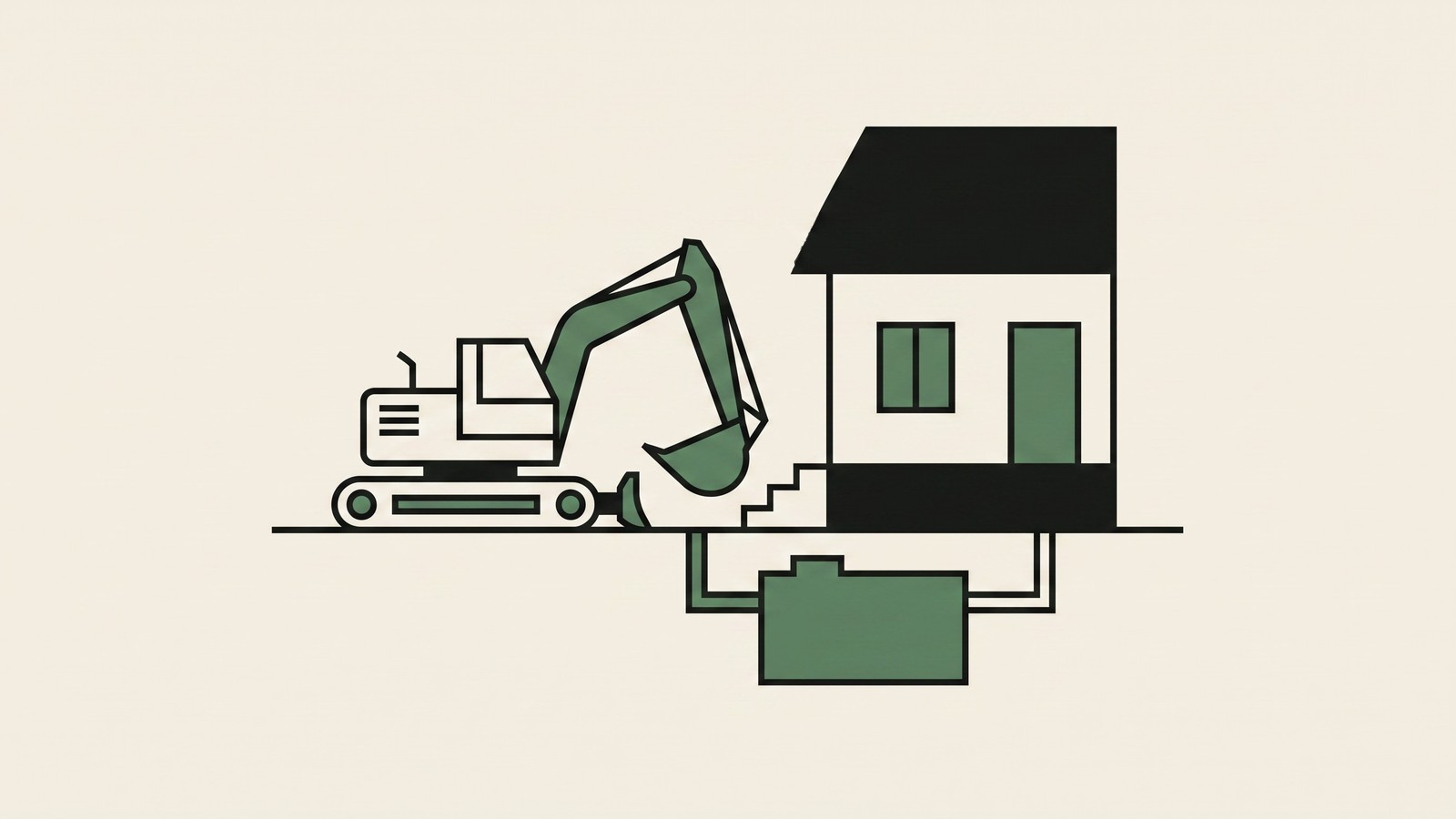
Most homeowners assume their septic tank is some mid-century American invention, probably from the 1950s suburban building boom. It's not even close. The core idea is older than the light bulb.
A French Inventor's Accidental Discovery
In 1860, a man named Jean-Louis Mouras built a sealed concrete tank in his backyard and ran clay pipes to it from his house. He constructed a concrete tank connected to his home's toilet via clay pipes, and wastewater would flow into the tank, where solids settled at the bottom, and liquids could flow out into a drainage field. He wasn't trying to invent anything. He just wanted a better way to deal with waste than the cesspools everyone else was using.
Ten years passed before he checked on it. After a decade of use, Mouras dismantled his system to evaluate its effectiveness, and found that the tank had effectively processed the waste, leaving only minimal solids. That was the moment that mattered. Bacteria had been quietly doing the work the whole time, breaking down solids with no pumps, no electricity, no maintenance. Mouras had stumbled onto anaerobic digestion before anyone had a name for it.
He patented the design in 1881, and it didn't stay in France for long. Within two years, his design had made its way to the United States, where it did not take long for the invention to proliferate. By the early 1900s, variations of the Mouras tank were showing up in rural properties across the country, including plenty of farmland that would eventually become the suburbs ringing Charlotte today.
What Stayed the Same
Here's the part that surprises people: the basic physics hasn't changed. A septic tank still does exactly what Mouras's concrete box did. Wastewater flows in, solids settle to the bottom, grease and lighter stuff floats to the top as scum, and the relatively clear liquid in the middle layer flows out to disperse into the soil. Anaerobic bacteria still break down the solids inside the tank. If you dug up a 1910 septic tank next to a 2024 one, the core concept would look almost identical.
What Actually Changed
The differences are in the details, and they matter a lot if you own one of these systems.
Materials
Mouras poured his tank out of concrete and routed clay pipe. Early American tanks used steel, which rusted out in 15 to 20 years. Modern tanks are precast concrete, fiberglass, or high-density polyethylene, built to last 25 to 40 years with far less corrosion risk.
The drain field got engineered
Mouras just let the liquid flow out into the ground and hoped for the best. Modern systems use a calculated drain field, sized to the soil's exact absorption rate and the number of bedrooms in the house. That's why anyone building or repairing a system in Mecklenburg County or York County has to get a soil evaluation before a permit gets issued. The Piedmont's red clay doesn't drain like sandy soil does, and a drain field sized for Myrtle Beach sand would fail fast in Steele Creek clay.
Alternative systems for difficult soil
This is the biggest practical change, and it's one most 19th-century engineers never had to think about. A huge amount of soil in this region simply can't support a basic gravity-fed system. Low-pressure pipe systems, drip irrigation fields, and aerobic treatment units now exist specifically for lots with heavy clay, shallow rock, or high water tables. Plenty of homes in Waxhaw, Indian Trail, and parts of Gastonia sit on exactly this kind of ground, which is why system design varies so much property to property even within the same subdivision.
Tanks are sealed and vented properly
Old tanks leaked gases and sometimes effluent through poorly sealed joints. Today's tanks have riser lids, proper venting, and effluent filters that catch solids before they ever reach the drain field, extending its life significantly.
How Often Should a Septic Tank Be Pumped in Charlotte, NC?
Most residential tanks need pumping every 3 to 5 years, depending on household size, tank capacity, and how much water goes down the drains. A family of five running a garbage disposal daily will fill a tank faster than a retired couple in a Lake Wylie lake house used on weekends. Soil conditions play a role too: a drain field already under stress from clay-heavy ground benefits from more frequent pumping, since it gives the soil less effluent to process at once.
Skip pumping long enough and solids build up past the point the tank can hold them, and they start migrating into the drain field, which is the single most expensive part of the system to repair or replace.
Why This History Still Matters
Understanding where septic systems came from explains why they're not something you can ignore for a decade and expect to be fine. Mouras got lucky that his tank worked for ten years with zero maintenance. Modern systems are more forgiving and more engineered, but they still rely on the same basic biology doing patient, quiet work underground. Easywater Septic is built around that idea: septic pumping, cleaning, and inspection across Charlotte, Rock Hill, Concord, Monroe, Mooresville, Matthews, and the rest of the metro area, treating a 160-year-old invention with the regular attention it still needs today.
Working with us is easy.
Book online in under a minute, or give us a call and we'll take it from there. No hassle, no hard sell, just straightforward septic service across the Charlotte metro.
Book online · (917) 653-2562